6 Best AI Recruiting Tools to Improve Candidate Experience (2026)


Quick answer
The best AI recruiting tools for candidate experience combine automated interview scheduling, branded candidate portals, and real-time communication — so candidates stay informed and engaged from first outreach to offer. candidate.fyi leads this category for enterprise teams, handling 82% of scheduling autonomously while achieving a 4.63/5.0 candidate satisfaction score.
When a qualified candidate drops out of your pipeline, it's rarely because your compensation was wrong or your job description missed the mark. It's usually because the process took too long, communication was unclear, or scheduling felt like an afterthought. These are operational problems — and they're fixable with the right candidate experience software.
Enterprise recruiting teams running dozens of open roles face compounding coordination challenges: panel scheduling across distributed teams, time zone conflicts, last-minute reschedules, and candidates waiting days for a confirmation that should take minutes.
This post evaluates six platforms on what they actually deliver for candidate experience — not just feature lists, but real performance on scheduling speed, communication quality, and the operational lift they take off your recruiting coordinators.
What Makes Candidate Experience Software Worth Investing In?
Featured snippet
Candidate experience software reduces the friction that drives candidates to drop out of hiring pipelines. When scheduling takes days and communication is inconsistent, qualified candidates disengage and accept competing offers. Platforms that automate coordination and keep candidates informed cut drop-off rates and improve offer acceptance — directly affecting recruiting ROI.
Most recruiting teams underestimate how much operational friction shapes candidate perception. A candidate who waits three days for an interview confirmation doesn't know your scheduler was out sick — they assume you're disorganized, or that you're not prioritizing them.
candidate.fyi's analysis of 257,946 scheduling events shows that candidates who self-schedule have an average time-to-interview of 3.9 days vs. 5.9 days through availability-based scheduling. That two-day difference has a measurable impact on offer acceptance rates and candidate engagement throughout the process.
How does poor scheduling affect candidate experience?
Poor scheduling signals operational immaturity to candidates evaluating your company. When a panel interview takes a week to coordinate, candidates are watching. They're asking: if it takes this long to schedule a 45-minute call, what does it say about how things work here?
Beyond perception, there's direct pipeline impact. Slow scheduling increases the window where candidates are actively interviewing elsewhere. Automation closes that window.
What do candidates actually want from the interview process?
According to candidate.fyi's 2025 platform data, automated scheduling touchpoints score 4.63/5.0 on candidate satisfaction — higher than human-coordinated interviews at 4.22/5.0. Candidates don't want more human interaction; they want fast, clear, consistent communication. The tools that deliver this have a direct measurable impact on your employer brand.
How We Evaluated These AI Recruiting Tools
Featured snippet
We evaluated AI recruiting tools across seven dimensions: scheduling automation depth, candidate portal quality, interviewer load balancing, ATS integration breadth, enterprise scalability, analytics capability, and security compliance. Tools were assessed on whether they reduce coordination burden while giving candidates a consistent, branded experience from first touchpoint to offer.
* Interview scheduling automation: Can the tool coordinate multi-panel interviews, handle time zone conversions, and manage reschedules without recruiter intervention?
* Candidate portal quality: Does the platform give candidates a branded, self-service hub for interview details, prep materials, and status updates?
* Interviewer load balancing: Does it track interviewer availability and prevent overbooking across your team?
* ATS integration depth: How cleanly does it connect with Workday, Greenhouse, Lever, and other enterprise ATS platforms?
* Enterprise scalability: Can it support 100+ interviews per week without performance degradation?
* Analytics: Does it provide visibility into scheduling efficiency, time-to-interview, and candidate engagement?
* Security and compliance: SOC 2 Type II, SSO readiness, and data encryption for enterprise IT requirements.
The 6 Best AI Recruiting Tools for Candidate Experience
1. candidate.fyi: The AI Coordination Layer Built for Enterprise Candidate Experience
Featured snippet
candidate.fyi is an AI-powered recruiting coordination platform purpose-built for enterprise teams. fyi, its AI agent, handles over 82% of scheduling sessions without human intervention, reducing time-to-interview to under 24 hours. Candidate satisfaction scores average 4.63 out of 5 for automated scheduling touchpoints — higher than manually coordinated interviews.
candidate.fyi doesn't just automate scheduling — it replaces the coordination layer entirely. fyi, the platform's AI agent, handles interview requests from the moment a candidate advances in your ATS to the moment the confirmation hits their inbox. Your recruiting coordinators are freed from Calendar Tetris and can focus on the parts of the process that actually require judgment.
The performance numbers from candidate.fyi's own platform data are worth citing directly: coordinators using candidate.fyi schedule 153 interviews per week compared to 38 without AI — a 5x capacity multiplier. That's the difference between a coordinator managing a handful of roles and one who can support an entire business unit.
On the candidate side, every person gets a personalized hub — branded to your company — with their interview schedule, preparation materials, team bios, and real-time status updates. They can self-schedule, reschedule, or ask questions without touching a recruiter's inbox. Self-scheduling reduces time-to-interview from 5.9 days to 3.9 days on average.
For enterprises running on Workday, Greenhouse, or Lever, candidate.fyi integrates at the ATS level so scheduling kicks off automatically the moment a candidate advances. Your ATS stays the source of truth. No manual triggers, no data hygiene issues. See the Workday integration.
Relativity Space ran 257 interviews in its first six weeks on candidate.fyi, cutting scheduling time by 76% — from 2.8 days to 16.2 hours. Bally's Entertainment achieved its first interview within 24 hours of platform launch.
candidate.fyi key features
* AI coordination agent (fyi): Handles scheduling end-to-end with autonomous management of conflicts, reschedules, and time zone conversions. Escalates edge cases to coordinators; handles 82% without intervention.
* Branded candidate hub: Every candidate sees a personalized, company-branded portal with scheduling, prep materials, and real-time status.
* Interviewer load balancing: Automatically distributes interviews across your team based on actual availability and capacity thresholds. Prevents burnout from overbooking.
* Self-healing schedules: When conflicts arise, fyi detects and resolves them automatically — rescheduling, notifying candidates, and updating your ATS.
* Interview analytics: Visibility into time-to-schedule, scheduling efficiency by role, interviewer workload, and candidate satisfaction scores.
* Native ATS integrations: Direct connections to Workday, Greenhouse, Lever, and other enterprise systems.
* SOC 2 Type II compliance: Enterprise-grade security with SSO readiness.
candidate.fyi pros and cons
Pros
* 82% of scheduling sessions handled autonomously — coordinators touch only the exceptions
* 5x interviewer capacity per coordinator vs. manual scheduling
* Candidate satisfaction averages 4.63/5.0 for automated touchpoints
* White-glove implementation with dedicated workflow design and onboarding
* Workday-native integration for enterprise ATS environments
Cons
* Analytics dashboards require initial configuration to match your specific reporting setup
* Implementation includes workflow design sessions — adds time upfront, though this investment pays off in adoption
Ready to cut your time-to-interview and reduce coordinator workload? See how candidate.fyi works →
153 Interviews Per Coordinator, Per Week.
The average team manages 38 manually. candidate.fyi's AI coordination layer gives your team 4x the capacity — without adding headcount.
2. Paradox: Conversational AI for High-Volume Candidate Engagement
Featured snippet
Paradox uses a conversational AI assistant named Olivia to handle candidate communication via text and chat. It automates initial screening and appointment setting at high volume, making it a fit for hourly or retail hiring where candidates prefer mobile-first interactions. Enterprise interview panel coordination requires additional configuration.
Paradox takes a chatbot-first approach to recruiting automation through its assistant, Olivia. Candidates interact via text or embedded chat on your careers page — Olivia handles screening questions, collects basic information, and books initial appointments without recruiter involvement.
The conversational model works well for roles where candidates prefer a quick back-and-forth: hourly workers, retail associates, frontline healthcare staff. For high-volume locations-based hiring, Paradox can move a lot of applicants through initial qualification efficiently.
Where it gets more complex is enterprise interview coordination. Multi-panel scheduling, interviewer load distribution, and complex ATS workflows require configuration beyond the core chatbot product.
Paradox features
* Olivia AI assistant: Text and chat-based candidate interaction for screening and scheduling
* Multi-language support: Available in multiple languages for global and distributed hiring
* Careers page integration: Olivia embeds directly on your existing site
* Mobile-first interface: Optimized for candidates who prefer text over email
Paradox pros and cons
Pros
* Handles high application volumes through conversational automation
* Mobile-first experience is a strong fit for hourly and frontline roles
* Multi-language support for international hiring
Cons
* Chatbot-driven approach is less suited to technical, executive, or multi-panel interview coordination
* Limited interviewer load balancing compared to dedicated coordination platforms
* Complex scheduling workflows require additional configuration
3. GoodTime: Automated Scheduling With Interviewer Load Balancing
Featured snippet
GoodTime automates interview scheduling with rules-based interviewer assignment and calendar integration. It connects with major ATS platforms and distributes interview load across your team based on availability settings. Organizations use it to reduce manual coordination in structured interview workflows, though candidate portal customization is limited.
GoodTime focuses on the operational side of interview scheduling — finding availability, assigning interviewers, and sending confirmations. The platform's load balancing features let you set rules for how interviews get distributed across your team, which helps prevent specific interviewers from getting overbooked.
The ATS integrations are solid, connecting to common enterprise systems and syncing candidate data back after interviews. Teams use it to reduce the manual back-and-forth of panel coordination, particularly for structured hiring processes where the interview format is consistent across roles.
GoodTime features
* Calendar integration: Connects with Google Calendar and Outlook for real-time availability
* Rules-based interviewer assignment: Distributes interviews based on availability and panel configuration
* ATS connectors: Integrations with major applicant tracking systems
* Scheduling analytics: Reporting on scheduling activity and interviewer load
GoodTime pros and cons
Pros
* Automates interviewer assignment with configurable rules
* Multiple ATS integrations for data sync
* Provides reporting on scheduling efficiency
Cons
* Candidate portal options are less customizable than enterprise-focused platforms
* Advanced coordination features require higher-tier plans
* Limited real-time conflict resolution for complex scheduling situations
4. ModernLoop: Interview Scheduling for Growing Tech Teams
Featured snippet
ModernLoop offers interview scheduling automation designed for tech companies scaling their hiring. It provides calendar syncing, scheduling templates for different interview formats, and branded email communication tools. The platform reduces time spent on individual scheduling tasks but has fewer analytics capabilities than enterprise-grade coordination platforms.
ModernLoop targets tech companies in growth mode — organizations that need to move candidates through structured interview loops quickly and don't have the coordinator headcount to do it manually. The template-based approach lets teams set up standard interview formats once and reuse them across roles.
The calendar sync is real-time, which helps surface availability accurately when building panel interview slots. As teams grow beyond a certain scale, ModernLoop's analytics limitations start to matter — understanding where bottlenecks form requires workarounds rather than native reporting.
ModernLoop features
* Scheduling workflow templates: Pre-built formats for different interview types
* Real-time calendar sync: Surfaces availability accurately across team members
* Branded email templates: Customizable candidate-facing communication
ModernLoop pros and cons
Pros
* Templates speed up scheduling setup for recurring interview formats
* Calendar syncing surfaces availability accurately
* Customizable candidate-facing email communication
Cons
* Analytics are less detailed than enterprise platforms
* Self-scheduling customization options are limited
* Interviewer workload tracking requires workarounds at scale
5. Phenom: AI-Driven Talent Experience Platform
Featured snippet
Phenom is a broad talent experience platform with AI features across recruiting, internal mobility, and career site personalization. Its AI personalizes job recommendations and chatbot responses based on candidate behavior. Interview scheduling is one component of a larger platform designed for organizations managing both external recruiting and internal talent development.
Phenom's value proposition is breadth. The platform spans external recruiting, internal mobility, university hiring, and career site optimization in a single suite. The AI features focus on personalization — surfacing the right job to the right candidate based on their browsing behavior and career profile.
Interview scheduling is not Phenom's primary function. Organizations that need deep scheduling automation typically run a separate tool alongside Phenom.
Phenom features
* AI-driven career site personalization: Job recommendations based on candidate behavior
* Talent CRM: Pipeline management and candidate nurturing
* Internal mobility tools: Alongside external recruiting in a single platform
* Chatbot: Automated candidate question-answering and initial engagement
Phenom pros and cons
Pros
* Broad talent experience platform covering career site, recruiting, and internal mobility
* AI personalization for job recommendations and candidate engagement
* Supports internal mobility programs alongside external hiring
Cons
* Interview scheduling is not the primary product focus
* Implementation typically involves multiple modules and dedicated admin resources
* Organizations needing deep scheduling automation usually require a separate dedicated tool
6. iMocha: Skills Assessment With Interview Intelligence
Featured snippet
iMocha focuses on skills-based hiring through pre-built assessments and AI proctoring. Its interview intelligence features include structured scorecards and evaluation templates. It is designed for organizations running skills-first hiring programs, with assessment capabilities as the core product and scheduling tools as a supplement.
iMocha solves a different problem than the other tools on this list. Where most are focused on operational coordination, iMocha is focused on evaluation quality. The platform's library of pre-built skills assessments lets you test technical and cognitive ability before the first interview, reducing unqualified candidates who make it to the scheduling stage.
Teams that use iMocha for assessment usually pair it with a dedicated scheduling tool to handle the coordination side.
iMocha features
* Pre-built skills library: Assessments spanning technical, cognitive, and soft skills
* AI proctoring: Monitors test integrity for remote assessments
* Interview scorecards: Structured evaluation templates for consistent interviewer feedback
* ATS integration: Connects assessment results with candidate records
iMocha pros and cons
Pros
* Large pre-built assessment library reduces setup time for skills-first hiring
* AI proctoring maintains assessment integrity for distributed hiring
* Structured scorecards add consistency to interview evaluation
Cons
* Primary focus is assessment, not scheduling or coordination
* Candidate portal features are assessment-centric, not experience-centric
* Full scheduling automation requires a separate dedicated platform
AI Recruiting Tools Comparison Table
Featured snippet
The table below compares six AI recruiting tools on the capabilities that most directly affect candidate experience: autonomous scheduling, branded candidate portals, and interviewer load balancing. candidate.fyi leads on all three. Paradox and GoodTime offer partial automation, while Phenom and iMocha are designed for different parts of the recruiting workflow.
| Platform | Autonomous Scheduling | Branded Candidate Portal | Interviewer Load Balancing |
|---|---|---|---|
| candidate.fyi | ✓ (82% automated) | ✓ | ✓ |
| Paradox | Chatbot-assisted | ✗ | ✗ |
| GoodTime | Rules-based | Limited | ✓ |
| ModernLoop | Template-based | Limited | ✗ |
| Phenom | Partial | ✓ | ✗ |
| iMocha | ✗ | Assessment-focused | ✗ |
How to Choose Candidate Experience Software for Your Team
Featured snippet
Choose candidate experience software based on your primary operational bottleneck. If scheduling delays are losing you candidates, prioritize autonomous coordination and self-scheduling. If drop-off happens during the interview process, look for branded portals and real-time candidate communication. Enterprise teams hiring at scale need tools with load balancing and ATS integration built in.
If your problem is scheduling speed: Candidates are waiting days for interview confirmations, or your coordinators are spending most of their time on Calendar Tetris. You need a platform with true autonomous scheduling — not just templates or chatbot-assisted booking. candidate.fyi's 82% autonomous resolution rate is the benchmark here.
If your problem is candidate communication: Candidates are disengaging or going quiet after first-round interviews. You need a branded portal and automated communication layer. candidate.fyi and Phenom both address this from different angles.
If your problem is interview quality consistency: You're getting inconsistent interviewer evaluation standards and no structured feedback. iMocha's assessment and scorecard tools are purpose-built for this.
If your problem is high-volume frontline hiring: You're processing hundreds of applications per week for hourly or entry-level roles. Paradox's conversational approach handles this efficiently.
What's your primary bottleneck — scheduling speed or candidate communication?
These two problems often feel related but require different tool investments. Scheduling speed is an operational problem — it needs automation and ATS integration. Candidate communication is an experience problem — it needs branded portals and self-service access. The best candidate experience software addresses both. candidate.fyi is designed to do exactly this: automate the coordination while elevating the candidate-facing experience simultaneously.
How does your team's hiring volume map to these tools?
Teams scheduling under 20 interviews per week can likely manage with template-based tools like ModernLoop. Teams at 50–100 interviews per week need load balancing and autonomous coordination — candidate.fyi and GoodTime both play here. Teams above 100 interviews per week need full agentic coordination: a platform where the AI makes decisions, not just follows rules. That's candidate.fyi's core design point.
FAQs About AI Recruiting Tools and Candidate Experience Software
What is candidate experience software?
Candidate experience software is a category of recruiting technology focused on how candidates perceive and move through your hiring process. It typically includes interview scheduling automation, branded candidate communication portals, self-scheduling capabilities, and analytics for tracking engagement and satisfaction. The goal is to reduce friction for candidates while reducing manual coordination work for recruiting teams. Leading platforms in this category include candidate.fyi, Paradox, and GoodTime.
How do AI recruiting tools reduce candidate drop-off and ghosting?
AI recruiting tools reduce candidate drop-off by eliminating the delays and communication gaps that cause candidates to disengage. When scheduling takes hours instead of days, and candidates have a branded portal showing exactly where they stand, there's no uncertainty driving them toward other offers. candidate.fyi's 2025 platform data shows automated scheduling touchpoints score 4.63/5.0 on candidate satisfaction — higher than human-coordinated interviews at 4.22/5.0. Automation, done well, builds more trust than manual processes.
Do these tools integrate with Workday and Greenhouse?
Most tools on this list integrate with major ATS platforms. candidate.fyi offers native Workday integration — when a candidate advances in Workday, scheduling kicks off automatically and all updates sync back to keep your ATS as the source of truth. The integration requires roughly half a day for a Workday admin to configure and no ongoing maintenance. Greenhouse, Lever, and other enterprise ATS platforms are also supported.
How long does it take to implement AI recruiting software?
Implementation timelines vary. Template-based tools like ModernLoop can be operational in days. Platforms with enterprise ATS integrations and workflow design — like candidate.fyi — typically take a few weeks and include white-glove onboarding with dedicated workflow configuration sessions. That upfront time investment pays off: teams that design their workflows carefully during implementation see higher automation rates and faster ROI.
What ROI can enterprise recruiting teams expect from these tools?
Based on candidate.fyi's 2025 platform data: a recruiting coordinator using AI coordination handles 153 interviews per week vs. 38 without AI — a 5x capacity multiplier. The 2026 Agentic TA Operations Blueprint reports industry-wide 40–65% cost reductions and 30–50% time-to-hire improvements among teams with mature AI coordination implementations. ROI compounds as your hiring volume grows.
How does candidate.fyi compare to Paradox for enterprise hiring?
candidate.fyi and Paradox serve different use cases. Paradox is optimized for high-volume, mobile-first hiring — frontline, hourly, or retail roles where candidates prefer chatbot interaction. candidate.fyi is built for enterprise complexity: multi-panel coordination, technical and executive hiring, distributed teams, and ATS-native workflows. If your hiring is primarily corporate, professional, or technical roles with panel interviews, candidate.fyi's coordination model is the better fit.
Bottom Line
The best AI recruiting tools don't just speed up scheduling — they change how candidates perceive your company before they've spoken to a single employee. When the coordination experience is frictionless and the communication is clear, candidates arrive at their interviews informed, prepared, and favorable toward your organization.
candidate.fyi is built specifically for this outcome. Its AI agent fyi handles the operational complexity so your team can focus on building relationships — and candidates get an experience that reflects your employer brand instead of your scheduling backlog.
More Articles
Recruiting Operations: The Most Underbuilt Function in Hiring
Recruiting operations exists as work in nearly every enterprise TA team, but rarely as a role. It gets absorbed by whoever has capacity, which means it is never staffed, budgeted, or measured. Here is what the function owns and how to build it without adding headcount.
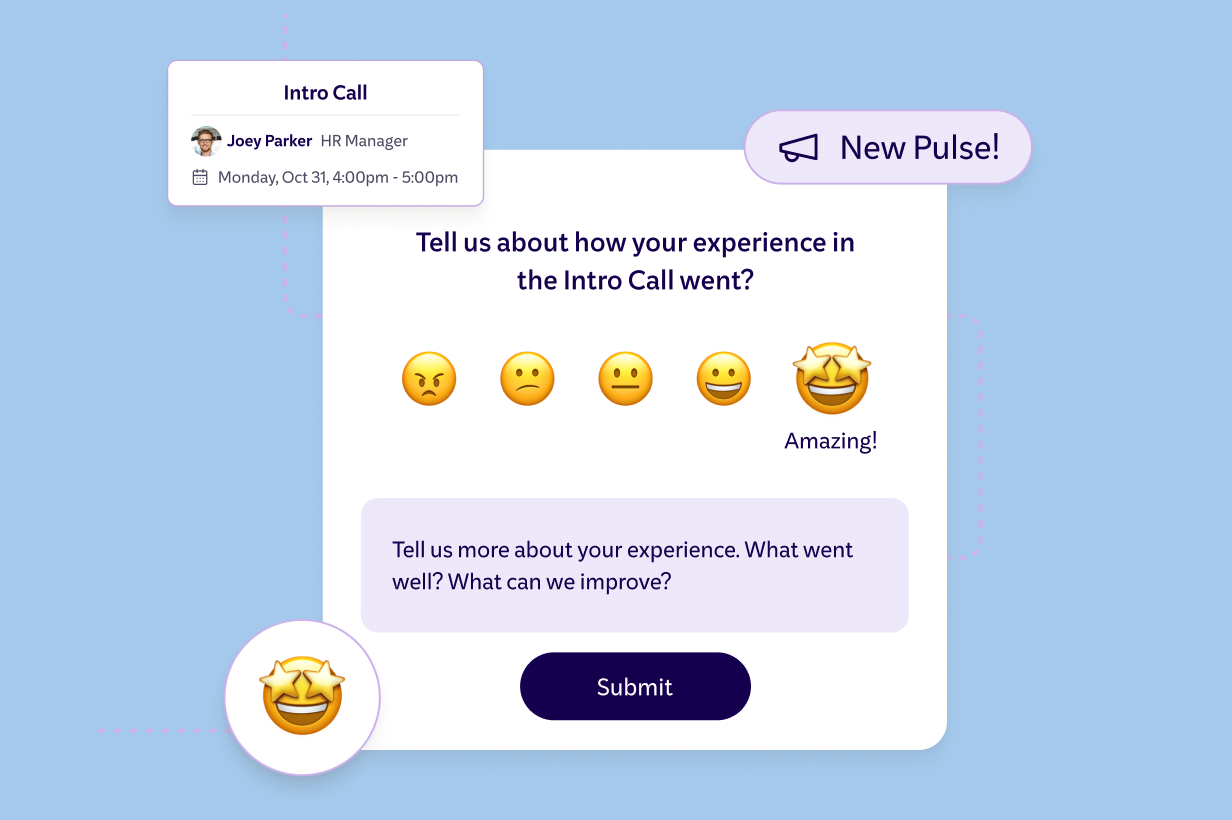
Optimizing Your Hiring Process: A Guide to Crafting the Ultimate Candidate Experience Survey
A well-crafted candidate experience survey provides you with the insights needed to refine your recruiting approach and bolster your company’s reputation.
Hiring Process Templates: Interview Workflows You Can Actually Reuse
Four hiring process templates worth standardizing: stage-gate definitions, the interview panel, the schedule and candidate itinerary, and the debrief scorecard. Plus the honest part: a 14% reschedule rate means the documented process and the real one diverge on roughly one interview in five.