How to Schedule an Interview: A Step-by-Step Guide for Recruiting Coordinators

Scheduling an interview sounds straightforward until you are doing it 50 times a week across multiple time zones, ATS systems, and a Slack thread that never stops moving. For recruiting coordinators at enterprise companies, interview scheduling is rarely a single task. It is a continuous coordination effort that compounds under volume, and right now, that volume is higher than most teams were built to handle.
This guide walks through how to schedule an interview the right way, from pre-scheduling alignment through candidate confirmation and reschedule management. It also covers the point at which manual processes stop being a workflow problem and start being a candidate experience problem.
Summary
Recruiting coordinators at enterprise companies are managing record interview volumes with flat or shrinking budgets. Greenhouse research shows that 50% of candidates have ghosted an employer, with 24% citing slow communication as the reason and 63% of US candidates being ghosted after the interview itself. Gen Z candidates are particularly unforgiving: 73% have ghosted an employer at some point. The data shows that scheduling delays are not a minor inconvenience. They are an active driver of candidate drop-off. This guide covers the five core steps of the interview scheduling process and explains why, at enterprise scale, AI scheduling tools have become necessary infrastructure rather than a nice-to-have. candidate.fyi customers report scheduling interviews in under one hour. Zendesk doubled their interview coordination capacity from 225 to 445 interviews per week in their first month using candidate.fyi.
What Does an Interview Schedule Actually Include?
An interview schedule is more than a calendar invite. At its most complete, it includes the interview format (phone screen, video panel, onsite loop), the names and roles of each interviewer, the time and time zone confirmed for each participant, a candidate-facing agenda or prep document, confirmation communications sent to both the candidate and the hiring team, and a debrief slot booked at the req level.
That last detail matters more than it sounds. Scheduling a debrief at the candidate level rather than the req level is one of the most common errors coordinators make under pressure, and it creates downstream confusion about where feedback should live. A complete interview schedule eliminates that ambiguity before it causes problems.
Step 1: Align on Format and Panelists Before Anything Goes on the Calendar
The most common source of rescheduling is preventable: a panelist gets added, swapped, or removed after the invite goes out. Before scheduling a single interview, confirm the interview format with the recruiter, finalize the panelist list, verify that all panelists have been briefed on the role, and confirm which stage of the process this interview represents.
Skipping this step creates a cascade. A last-minute panelist change means pulling an invite, re-coordinating availability, and re-sending confirmation to the candidate, all of which introduces delay. In a market where candidates are evaluating multiple employers simultaneously, delay has a cost.
Step 2: Coordinate Panelist Availability Without Losing the Candidate
Once the panelist list is locked, availability coordination begins. For a single one-on-one interview, this is manageable. For a multi-stage panel with three or four interviewers spread across time zones, it becomes a significant administrative task.
One approach is to send a shared availability poll or a recurring email thread asking each panelist to pick time windows they are available, then manually cross-reference those windows against the candidate's availability and the ATS. That process works. It just takes time and at enterprise scale, time is the resource coordinators have least of.
That approach works until volume grows beyond a weekly poll can absorb. candidate.fyi's AI availability matching reads panelist calendars in real time and surfaces optimal scheduling windows automatically, eliminating the manual cross-referencing entirely. When a panelist cancels, the platform handles rescheduling logic without the coordinator rebuilding the process from scratch. For teams managing dozens of open reqs at once, that is not a convenience.
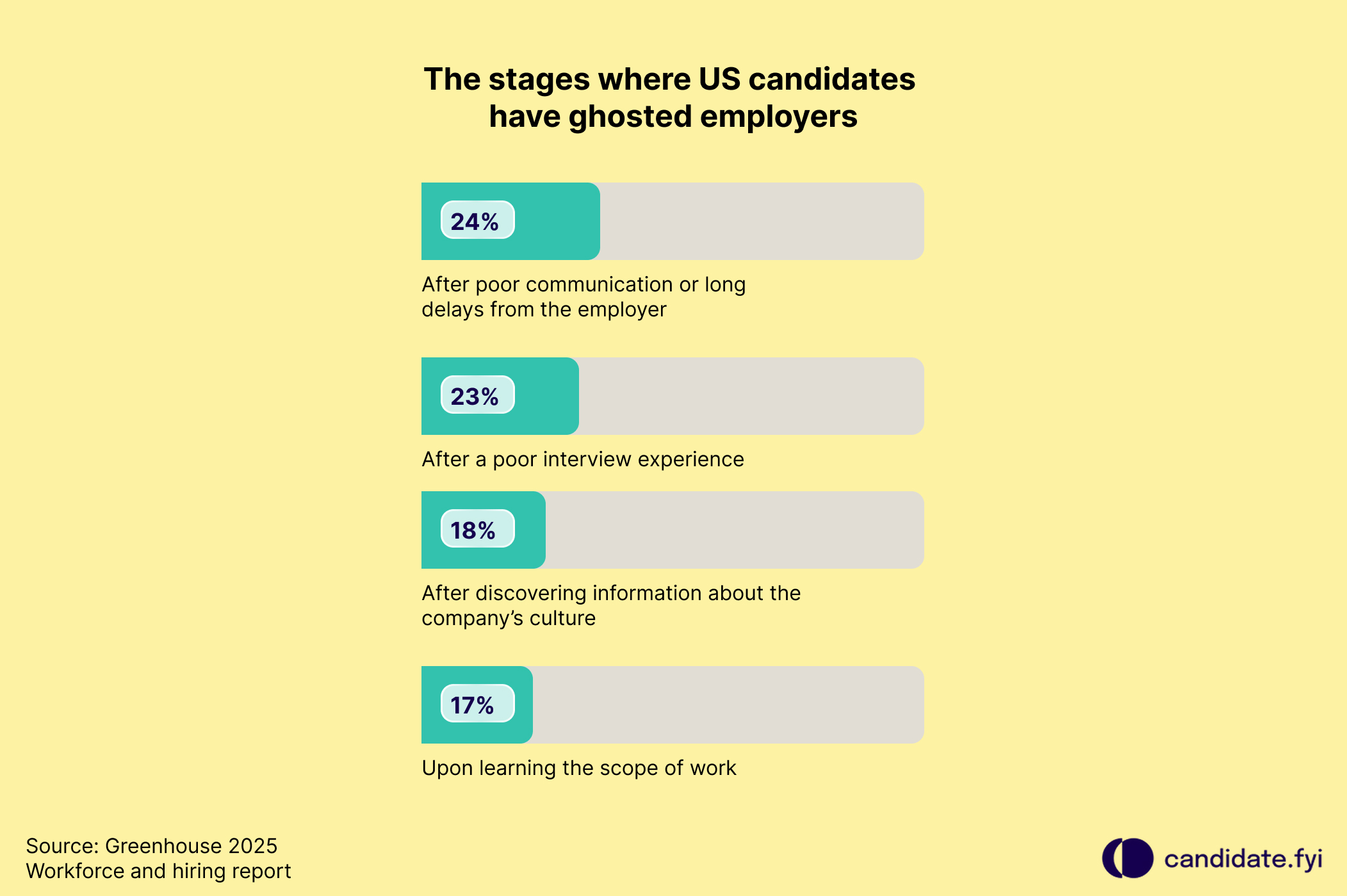
Greenhouse found that 50% of candidates have ghosted an employer, and among those candidates, 24% cited slow communication or long delays as the reason. The research is clear that many drop-offs have nothing to do with the job or the recruiter's relationship with the candidate. The delay itself pushes them away. Greenhouse data also shows that 63% of US candidates were ghosted after a job interview, meaning teams lose control of communication at exactly the moment a candidate is most engaged and ready to move forward.
When a coordinator is managing availability polling across 30 or 40 open requisitions simultaneously, the manual cross-referencing that feels reasonable for one interview becomes the bottleneck that slows down the entire pipeline.
Diagnose Your Interview Scheduling Pains
Take the 2-minute Recruiting Coordination Maturity Assessment and discover exactly where your team stands and what to fix next.
Step 3: Send the Interview Invite and Confirm the Candidate
Once availability is confirmed, the candidate-facing invite should go out promptly. A strong interview invite includes the date, time, and time zone written out explicitly (not just embedded in a calendar link), the names and titles of each interviewer, a clear description of the interview format and expected duration, any prep materials or resources the candidate should review, and a direct point of contact if they have questions or need to reschedule.
Confirmation is not a separate step from the invite. Once the invite is sent and accepted, a follow-up confirmation that recaps all logistics and reiterates the prep guidance reinforces that the team is organized and attentive. Candidates are evaluating the company throughout this process, and a clear, complete invite signals competence in a way that a rushed or incomplete one does not.
The tone matters as much as the content. An organized invite tells a candidate something about what it would be like to work there. A vague one tells them something too.
Hi {{candidate_first_name}},
We’re excited to move forward with your application for the {{job_name}} position at {{org_name}}! To make scheduling as convenient as possible, we invite you to select a time for your interview that best fits your availability.
Please use the link below to pick a time that works for you:
{{scheduling_link}}
Once you’ve scheduled, we’ll send a confirmation with all the necessary details. If you have any questions or need assistance, feel free to reach out to me directly at Recruiter's Email.
Looking forward to connecting soon!
Best regards,
{{request_owner_name}}
Step 4: Handle Reschedules Without Losing the Candidate
Reschedules are one of the highest-risk moments in the interview process. A candidate who receives a reschedule request is already absorbing a negative signal, and how quickly and cleanly the team recovers determines whether that signal becomes a reason to disengage.
The risk is amplified with younger candidates. Greenhouse data shows that 73% of Gen Z candidates have ghosted an employer at some point. This generation expects speed and transparency throughout the process, and a slow or confused reschedule response reads as confirmation that the company operates poorly.
For enterprise teams managing hundreds of interviews per week, reschedule logic cannot depend on a coordinator manually re-checking calendars, re-drafting a communication, and re-confirming four panelists by hand. The margin for slow recovery is thin, and it gets thinner as volume grows.
Step 5: Schedule the Debrief Before the Interview Day Arrives
Debrief scheduling is the step most coordinators handle reactively, booking it after the interview wraps or after a hiring manager follows up asking where the feedback session is. That reactive approach creates lag at the exact moment when hiring decisions need to move quickly.
The better practice is to have the debrief on the calendar before the interview happens. Book it at the req level, not the candidate level, so feedback from multiple candidates flows into a consistent structure. Confirm that all panelists know what they are evaluating and where their feedback should go before they walk into the interview room.
This step does not take long when the interview schedule is already built. It takes significantly longer when it becomes a separate coordination effort two days after the interview concludes, and by then the hiring manager is already following up and the candidate is already waiting.
When Manual Scheduling Breaks Down at Scale
Everything described above is manageable when interview volumes are low. When a recruiting coordinator is managing 40 or 50 open requisitions, coordinating interviews across global time zones, and supporting a team of recruiters with competing priorities, the manual steps compound into a full-time administrative workload that leaves almost no room for the relational work that actually moves candidates through the funnel.
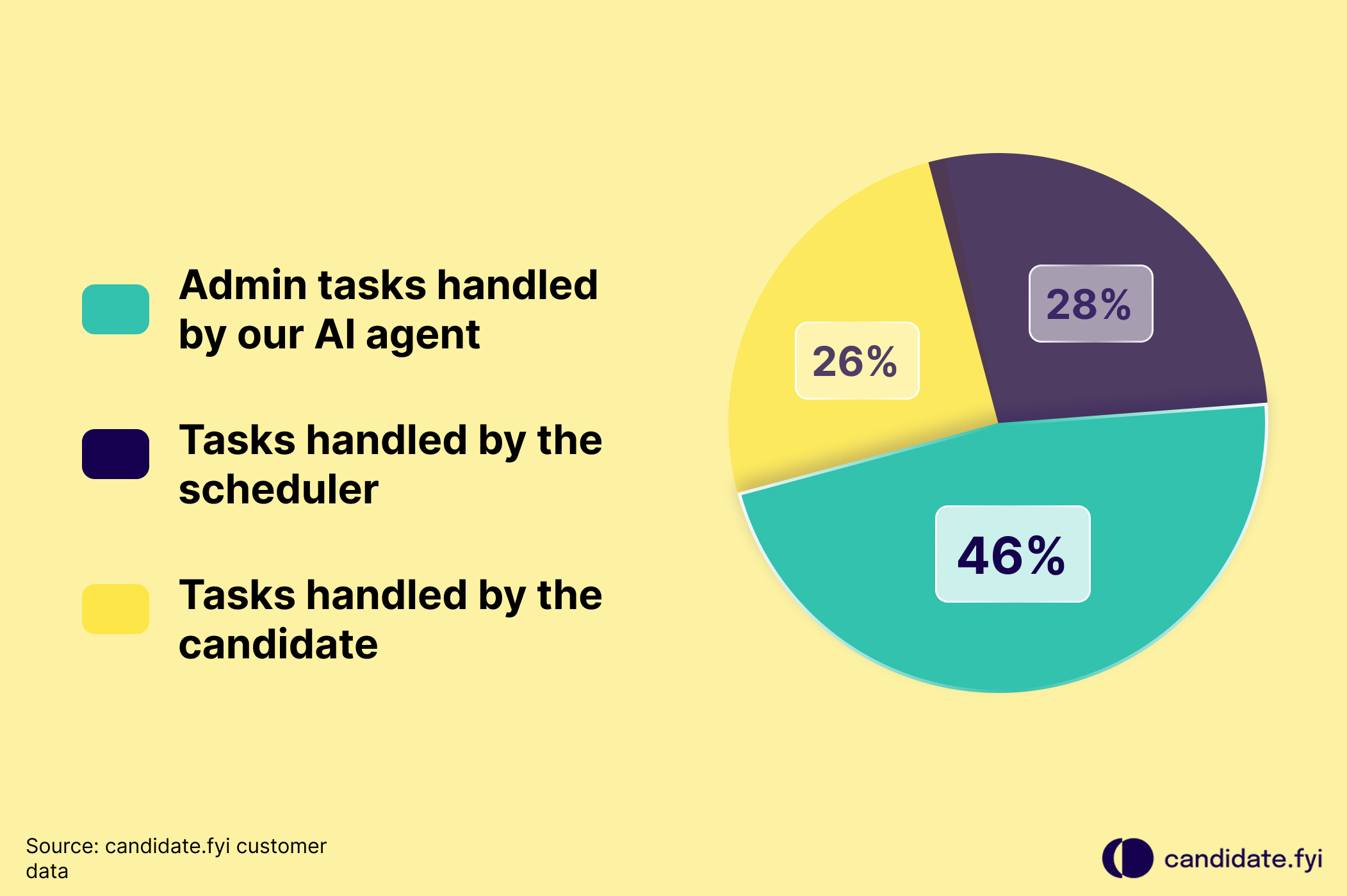
The current hiring market has made this harder, not easier. Application volumes have increased, but TA budgets have largely stayed flat or contracted. Coordinators are absorbing more volume with the same or fewer resources, and the system shows the strain in the data. Our research found that recruiting coordinators spend 46% of their time on admin-related scheduling tasks. Manual scheduling takes an average of 2.8 days per interview when coordinators are collecting availability by hand.
At that pace, candidate experience becomes a casualty of capacity. Candidates who were genuinely interested stop hearing from the team and make their own decision about what that silence means.
candidate.fyi customers report scheduling interviews in under one hour. The difference is removing the manual steps that were never a good use of coordinator time in the first place.
How AI Interview Scheduling Changes the Equation
When AI handles scheduling coordination, the coordinator's role shifts from logistics manager to experience manager. That shift is visible in the outcomes.
Zendesk runs a global recruiting operation with recruiters across three continents, supported by only 6 recruiting coordinators managing interviews across Americas, EMEA, and APAC time zones. One month after implementing AI-powered interview scheduling with candidate.fyi, their team went from averaging 225 interviews scheduled per week to 445, nearly double the throughput with the same headcount.
Everett Chaffin, Director of Global Talent Acquisition Operations at Zendesk, described what drove the decision:
"The biggest thing for us, and what drove us to candidate.fyi, is that we need something that's very AI focused. How do we do more with less and make sure that we're as efficient as possible?"
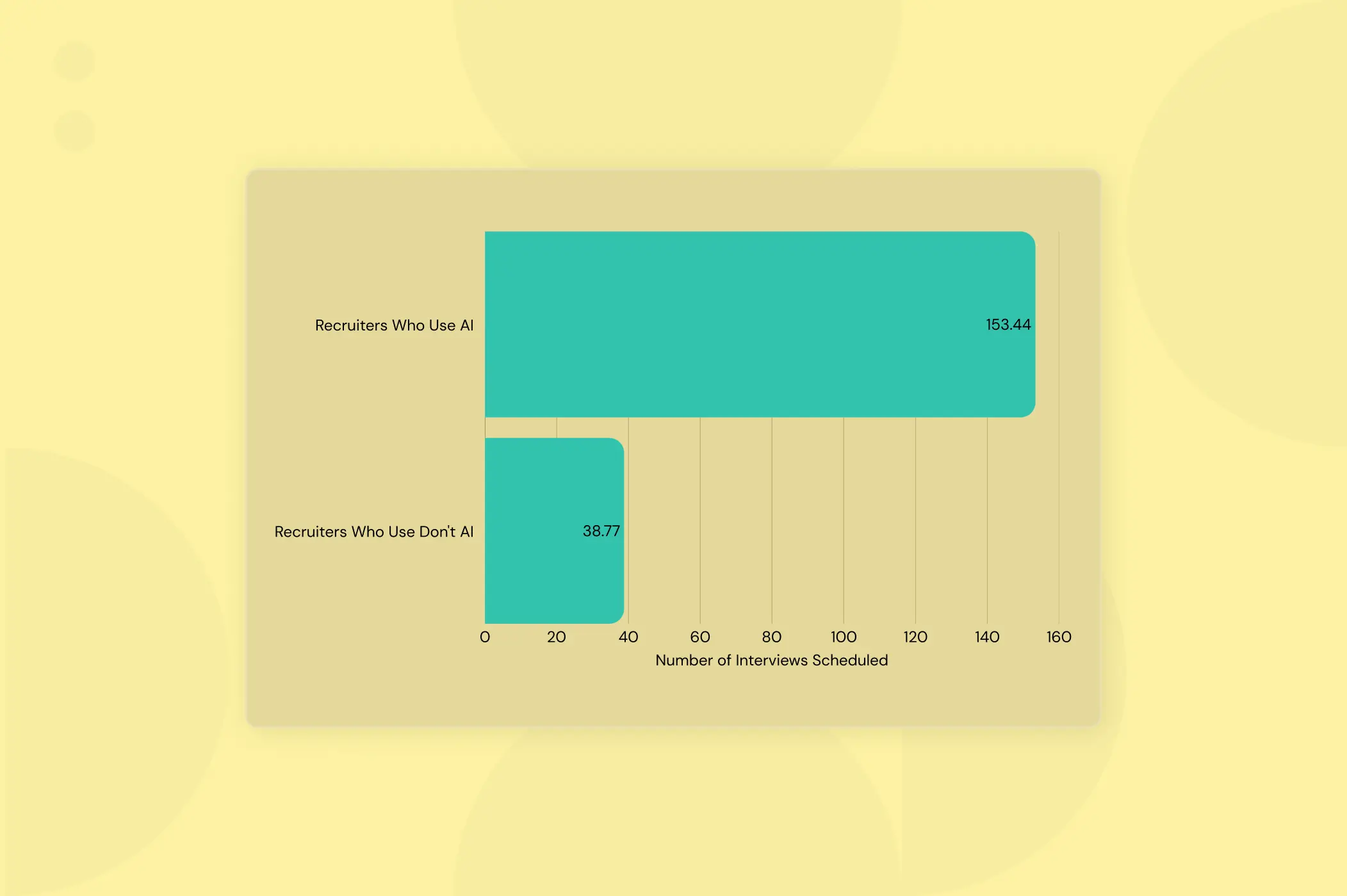
The capacity improvement is consistent with what the data shows more broadly. AI-enabled recruiting coordinators handle approximately 158 interviews per week compared to roughly 30 for coordinators managing schedules manually. That is is a fundamental change in what a coordination team can accomplish without burning out or sacrificing the candidate experience that drives hiring outcomes.
Questions and Answers
How long does it take to schedule an interview?
Manual interview scheduling takes an average of 243 minutes per interview when coordinators are collecting availability by hand, according to candidate.fyi's Interview Scheduling Gap Report. With AI-powered self-scheduling, that time drops dramatically. candidate.fyi customers report scheduling interviews in under one hour. The difference comes from removing the back-and-forth availability coordination that consumes the majority of manual scheduling time.
Why do candidates ghost after interviews?
Greenhouse research found that 63% of US candidates were ghosted by an employer after a job interview, and 50% of candidates overall have ghosted an employer at some point. Among candidates who ghosted, 24% cited slow communication or long delays as the reason. The data suggests that post-interview ghosting is most often a communication and speed problem, not a fit problem. Candidates who stop hearing from a team after an interview draw their own conclusions and move on.
How do you schedule interviews across multiple time zones?
Coordinating interviews across time zones manually requires checking availability windows for each participant, converting times across regions, and finding overlap that respects working hours globally. AI interview scheduling tools handle this automatically by reading calendar availability in real time, detecting overlapping windows across regions, and sending invites adjusted to each participant's local time zone. For enterprise teams coordinating panels across Americas, EMEA, and APAC, this eliminates the manual coordination layer entirely.
At what point does a recruiting team need interview scheduling software?
Teams typically hit the limit of manual scheduling when coordinator capacity can no longer keep pace with interview volume, when rescheduling errors begin affecting candidate experience, or when global time zone complexity makes availability coordination a multi-hour task per interview. The operational signal is clear when coordinators are spending the majority of their time on scheduling logistics rather than candidate relationships, recruiter support, or process improvement.
More Articles

Enhancing Candidate Experience: Top Interview Scheduling Strategies
Unlock the secrets to enhancing candidate experience with top interview scheduling strategies in our comprehensive blog post. Learn how to optimize scheduling to improve communication, personalize interactions, and integrate technology, thereby boosting candidate satisfaction and positioning your company as a top employer choice.
The Interview Scheduling Gap No One Talks About
The recruiting industry reached a breaking point in 2025. This report explains the forces behind the growing gap, why manual workflows break under pressure, and how issues like ghosting, internal mobility delays, and misaligned expectations are all symptoms of the same problem.
The Best Time of Day to Interview: What 257,946 Scheduling Events Show
The "10:30am Tuesday" rule is recruiting folklore with almost no evidence behind it. Our platform data can't tell you which hour interviews better, but it can tell you which day falls apart. Mondays generate 40% more interviewer declines than Fridays, and each one costs about 68 hours to resolve by hand.