What Is Full Cycle Recruiting? All Eight Stages and What They Cost

Quick answer
Full cycle recruiting means one recruiter owns every stage of a hire, from intake to onboarding, instead of handing work to sourcers and coordinators. Greenhouse data puts a recruiter at 650.5 interviews scheduled a year and 4.9 hires a month. The stage that breaks first is almost always interview coordination.
A full cycle recruiter is the person who, at six on a Thursday evening, is still trying to find one hour that four interviewers and a candidate can all agree on.
The role gets described as eight stages and sold as ownership. Both are fair. What nobody puts a number on is which stage eats the day, and that omission is why full cycle recruiters are so often surprised by their own workload. The stages that look big on the org chart, sourcing and interviewing, are not the ones that run the clock.
What is full cycle recruiting?
Featured snippet
Full cycle recruiting is a model where a single recruiter owns a requisition end to end: intake, sourcing, screening, coordination, interviewing, selection, offer and onboarding. It is also called full life cycle recruiting, end to end recruiting, 360 recruiting or full desk recruiting. The alternative is a split model staffed with specialist sourcers and coordinators.
The defining feature is not the stage list. It is that one name sits next to every stage. The same person writes the intake questions, runs the search, screens the resumes, books the panel, sits in the debrief and extends the offer. Nothing gets passed sideways, so nothing gets dropped in a handoff.
The alternative is the split model most large talent teams run: sourcers at the top of the funnel, recruiters in the middle, recruiting coordinators owning scheduling and logistics. Each person gets good at one stage, and the tradeoff is that a candidate meets three or four of your people before the hiring manager, with every boundary between them a place where a thread goes quiet.
Worth naming plainly: for a lot of teams in 2026, full cycle is not a philosophy they chose. It is what is left. Greenhouse's Hire Standard benchmark report, published in March 2026 across more than 6,000 companies and 640 million applications, has recruiters per organization falling from 10.43 in 2022 to 4.62 in 2025, while applications per recruiter rose 411.8 percent and monthly hires per recruiter rose 122.3 percent. The specialists did not get reassigned. They got removed, and their stages landed on whoever was still there.
The eight stages of full cycle recruiting
Featured snippet
The eight stages are intake and role definition, sourcing, screening, interview coordination, interviewing, selection, offer and close, and onboarding. Most published frameworks list six by folding coordination and interviewing together inside a single selecting step, which hides the stage where a full cycle recruiter loses the most hours.
Almost every explainer on this topic uses the same six stage template: preparing, sourcing, screening, selecting, hiring, onboarding. It is a clean description of a career and a poor description of a week, because two of its stages are doing far too much work. This list splits them.
1. Intake and role definition. Recruiter and hiring manager agree what the role is, who is on the panel, and what the loop looks like. The cheapest hour in the process and the most frequently skipped: a vague intake meeting does not fail immediately, it fails six weeks later as a rewritten job description or a re-run panel. Earlier still sits the requisition approval that has to clear first.
2. Sourcing. Job posts, outbound, referrals, silver medalists. The stage that gets the most attention in tooling, and worth sizing honestly: Greenhouse puts recruiter sourced hires at 9.7 percent of all hires. The other nine in ten arrive through channels the recruiter manages rather than personally works.
3. Screening. Resume review, the phone screen, the first pass on the pile. Gem's 2026 benchmarks report, drawn from more than 165 million applications and 1.2 million hires, has 8 percent of applicants passing initial screening and 0.5 percent receiving an offer, so roughly one hire per 200 applications. Screening is also the volume valve for everything downstream: a loose screen does not produce better candidates, it produces more panels to build.
4. Interview coordination. Collecting availability, finding an intersection across a panel, booking rooms or links, sending the confirmation, handling the reschedule when an interviewer drops. The stage the standard six do not name, and per the arithmetic below the largest single consumer of a full cycle recruiter's hours. The mechanics are in how to schedule an interview.
5. Interviewing. The conversations themselves. Greenhouse has interview hours per hire at 12.3 in 2025 and interviews scheduled per job at 22.7. The one stage almost every team measures, because it lands on senior calendars and senior people complain. Gem has interviews per hire up 33 percent since 2021, so loops are getting longer, not shorter. The useful ceiling is the subject of how many interview rounds you should have.
6. Selection. Debrief, scorecards, the decision. Cheap in hours, expensive in consequences. The failure mode is not a wrong call, it is a call nobody makes while the panel waits for a debrief that keeps getting moved. Structured interview scorecards mostly exist to stop that.
7. Offer and close. Approval, verbal, written, negotiation, references, background check. Gem puts offer acceptance at 82 percent, high enough that most teams treat the stage as administrative. Broadly right, though the 18 percent who decline are expensive enough to deserve a real close plan.
8. Onboarding. Paperwork, start date, equipment, the first week. Whether it belongs to recruiting at all is contested. In a full cycle model it usually does, because there is nobody to hand it to.
Why the standard stage list hides the coordination work
Featured snippet
Six stage frameworks place interview coordination inside selecting, so it never gets its own line in a workload plan. Ashby data shows a median of six days between asking a candidate for availability and the interview starting, and only about 65 percent of candidates interview within a week of that request.
The six stage template was written to explain the job to people considering it, which is a different purpose from planning capacity. It sizes stages by how important they sound rather than how long they take, and coordination loses badly under that rule. It sounds like logistics, so it gets folded into selecting, and once it has no name it cannot be staffed, budgeted or measured. Same argument we made about recruiting operations: unnamed work shows up as recruiter overtime rather than a line item anyone can defend.
Ashby's talent trends data, drawn from 2.8 million candidates and more than 5.1 million interview events, gives the stage a number. The median gap between requesting a candidate's availability and the interview starting is six days, and only around 65 percent of candidates interview within a week of being asked. Those days are not evaluation. Nobody is thinking during them. They are the cost of getting calendars to agree, and in a full cycle model one person pays all of it.
153 Interviews Per Coordinator, Per Week.
The average team manages 38 manually. candidate.fyi's AI coordination layer gives your team 4x the capacity — without adding headcount.
What owning the full cycle actually costs in hours
Featured snippet
Greenhouse puts a recruiter at 650.5 interviews scheduled a year, up 128 percent since 2022. If half of those batch into panels, that is roughly 325 separate scheduling events. At our platform average of 243 minutes of manual coordination per event, coordination alone runs to about 1,300 hours a year.
Here is the arithmetic, with the assumptions stated so you can disagree with them. Greenhouse has interviews scheduled per recruiter per year at 650.5 in 2025, up 128 percent since 2022. Interviews are not scheduling events: a four person panel held back to back is one negotiation, not four. Assume generously that half of them batch into shared events, which leaves roughly 325 distinct scheduling events a year.
On our own platform, a manually coordinated event, the kind where a human collects availability by email and hunts for an intersection, averages 243 minutes of coordination time. The same event, when the candidate self schedules against real interviewer availability, averages 27 minutes.
325 events at 243 minutes is 1,316 hours. Against a 2,000 hour working year, that is roughly two thirds of one recruiter, spent entirely on getting calendars to agree. The same 325 events at 27 minutes is 146 hours. The gap between those two numbers, about 1,170 hours, is the part of the job that is structural rather than necessary.
The 50 percent batching assumption is doing real work there, so a team running mostly single interviewer screens lands higher and a team running true onsite loops lands lower. And these are coordination minutes, not calendar minutes: they arrive in fragments across a week rather than one block, which is why they go unnoticed.
Now compare that to the number your organization actually tracks. Greenhouse has interview hours per hire at 12.3, so at 4.9 hires a month that is around 720 interviewer hours a year. Those get counted, because they appear on senior calendars. The 1,300 coordination hours appear nowhere, because they belong to one person who is not in the room. Add our 14 percent structural reschedule rate, roughly one event in seven renegotiated for reasons unrelated to the candidate, and that is another 46 restarts a year, each a fresh availability request and a fresh window in which the candidate can decide they have been forgotten.
This is the mechanism behind the number most teams find hardest to explain in time to hire: Greenhouse has time to fill rising from 43.64 days in 2022 to 59.67 days in 2025, a 37 percent increase, over the same period hires per recruiter more than doubled. Throughput went up and elapsed time went up with it, because the constraint moved into the stage nobody instrumented.
See how autonomous coordination handles the scheduling stage.
Full cycle or split: which model fits your volume
Featured snippet
Full cycle recruiting works while one person can hold the whole load. Gem puts the median recruiter at 13.4 open roles, and SHRM's directional range for a healthy desk is 15 to 20. Past that, the usual first specialist hire is a coordinator, because coordination is the stage that scales worst.
The honest version of this comparison is that full cycle wins on everything except throughput, and throughput is what eventually decides it. What it genuinely does better: one point of accountability, so nothing sits in the gap between two job descriptions. One relationship with the candidate from first contact to start date. A recruiter who has heard the hiring manager's actual bar and sat in the debrief, and can therefore screen against reality rather than a job description. That is why experienced recruiters defend the model.
What it does worse: every stage lands on one calendar, and the stages do not compete fairly for it. Sourcing and screening are solo work that fits any gap. Coordination needs other people, who are not free in the twenty minutes the recruiter has. The stage that needs the most elapsed time gets the least attention, and it queues.
On where the crossover sits, the published numbers are directional rather than authoritative. Gem puts open roles per recruiter at 13.4. SHRM describes a national average of 30 to 40 open requisitions with a healthy range nearer 15 to 20, while noting the average is more an economic indicator than a workload standard. Read both as a range, not a threshold.
The more useful question is not how many requisitions but which stage is already slipping. If the pipeline is thin, a sourcer is the right hire. If candidates wait days for a slot and interviewers are declining, the constraint is coordination, and a second full cycle recruiter buys a second person with the same bottleneck. Build the coordination capacity into your hiring plan before the peak, not after it.
Where the full cycle breaks first
Featured snippet
Coordination breaks before sourcing or screening because it is the only stage a recruiter cannot complete alone. Sourcing and screening are solo work that fits any gap in a day. Scheduling needs other people's calendars to agree, so it stalls whenever the recruiter is in an interview.
Every other stage degrades gracefully under load. A busy recruiter sources less, screens faster, writes a shorter debrief note. The work gets worse but it keeps moving. Coordination does not degrade, it stops. You cannot half book an interview: either the intersection was found and the confirmation went out, or the candidate is still waiting, and while they wait the recruiter's only move is another email.
That asymmetry is why the first symptom of an overloaded full cycle desk is almost never a bad hire. It is a candidate going quiet. Greenhouse's ghosting data is blunt about the timing: 63 percent of US candidates who ghosted did so after an interview, and 24 percent cite slow communication. The panel hours were already spent by the time the candidate concluded they had been dropped. Silence reads as a decision.
The second symptom is interviewer trust. Reschedules cluster on the same few reliable interviewers, and those people start declining. Once a panel's senior members decline, the recruiter's remaining lever is to widen the loop, which adds scheduling events, which adds reschedules. The stage by stage version of that leak is in our recruiting funnel benchmarks, and it is why high volume days have to be built as batches rather than many separate negotiations, the point of running 40 interviews in one day.
What to fix before you add headcount
Featured snippet
Before hiring a second recruiter, instrument the coordination stage: measure days from availability request to confirmed slot, count reschedules per hire, and count scheduling events rather than interviews. Moving a 243 minute manual coordination event to a 27 minute self scheduled one recovers capacity you already pay for.
Four things to measure this week, none of which need a new tool.
* Median days from telling a candidate they are moving forward to a confirmed slot on the calendar. Not to the interview, to the confirmation. This is what the Ashby six day median describes, and most teams have never looked at their own.
* Reschedules per hire, split into candidate initiated and interviewer initiated. The second number is the one you control.
* Scheduling events per hire, not interviews per hire. If the two are close, your loops are not batching and every interview is its own negotiation.
* Decline rate by interviewer. If it concentrates on three names, that is a load problem, not an engagement problem.
Then change one thing before you change the model. Letting candidates self schedule against real interviewer availability is the largest lever on that list, because it moves the 243 minute event to a 27 minute one without asking anyone to work differently. Our documented versions are in hiring process templates, with the caveat that a template is only worth what executes.
Frequently asked questions
What is full cycle recruiting?
Full cycle recruiting is a model where one recruiter owns every stage of a hire, from intake and sourcing through screening, coordination, interviewing, selection, offer and onboarding, rather than passing stages to specialist sourcers or coordinators.
What are the stages of full cycle recruiting?
Intake and role definition, sourcing, screening, interview coordination, interviewing, selection, offer and close, and onboarding. Most published frameworks compress these into six by folding coordination and interviewing into one selecting stage.
Is full cycle recruiting the same as full desk or 360 recruiting?
Broadly yes. Full life cycle recruiting, end to end recruiting and 360 recruiting all describe the same single owner model. Full desk is the agency term and usually adds business development, so a full desk recruiter also sells the search.
What is the difference between full cycle recruiting and a coordinator model?
In a coordinator model, scheduling, logistics and candidate communication move to a dedicated recruiting coordinator so the recruiter stays on sourcing, screening and closing. Ashby data has coordinators supporting around four recruiters each.
How many requisitions can a full cycle recruiter handle?
The benchmarks are directional. Gem puts open roles per recruiter at 13.4, and SHRM describes a healthy range nearer 15 to 20 against a national average of 30 to 40. Difficulty matters more than the count: hard to fill searches consume several times the coordination of high volume ones.
The bottom line
Full cycle recruiting is a good model with one badly documented cost. The stage lists everyone publishes have six entries, and the stage that consumes the most hours is not one of them. Name it, measure it, and the model holds up a lot better at the volumes recruiters are now carrying.
If the arithmetic above looked familiar, coordination is the stage worth automating first, because it is the only one where the work is structural rather than judgment. Book a demo and we will run your own numbers through it.
More Articles
8 Best Automated Interview Scheduling Tools with Workday Integration
Comparing the 8 best automated interview scheduling tools that integrate with Workday — evaluated on panel complexity, multi-timezone support, candidate updates, and enterprise controls.
Workday Interview Scheduling: How AI Agents Handle What the ATS Can't
Workday Recruiting tracks candidates and manages requisitions, but the coordination gap between candidate advanced and confirmed interview still requires manual work. This guide shows how AI agents close that gap with embedded video walkthroughs of scheduling windows, queue management, Workday feedback via Slack, and global multi-timezone scheduling.
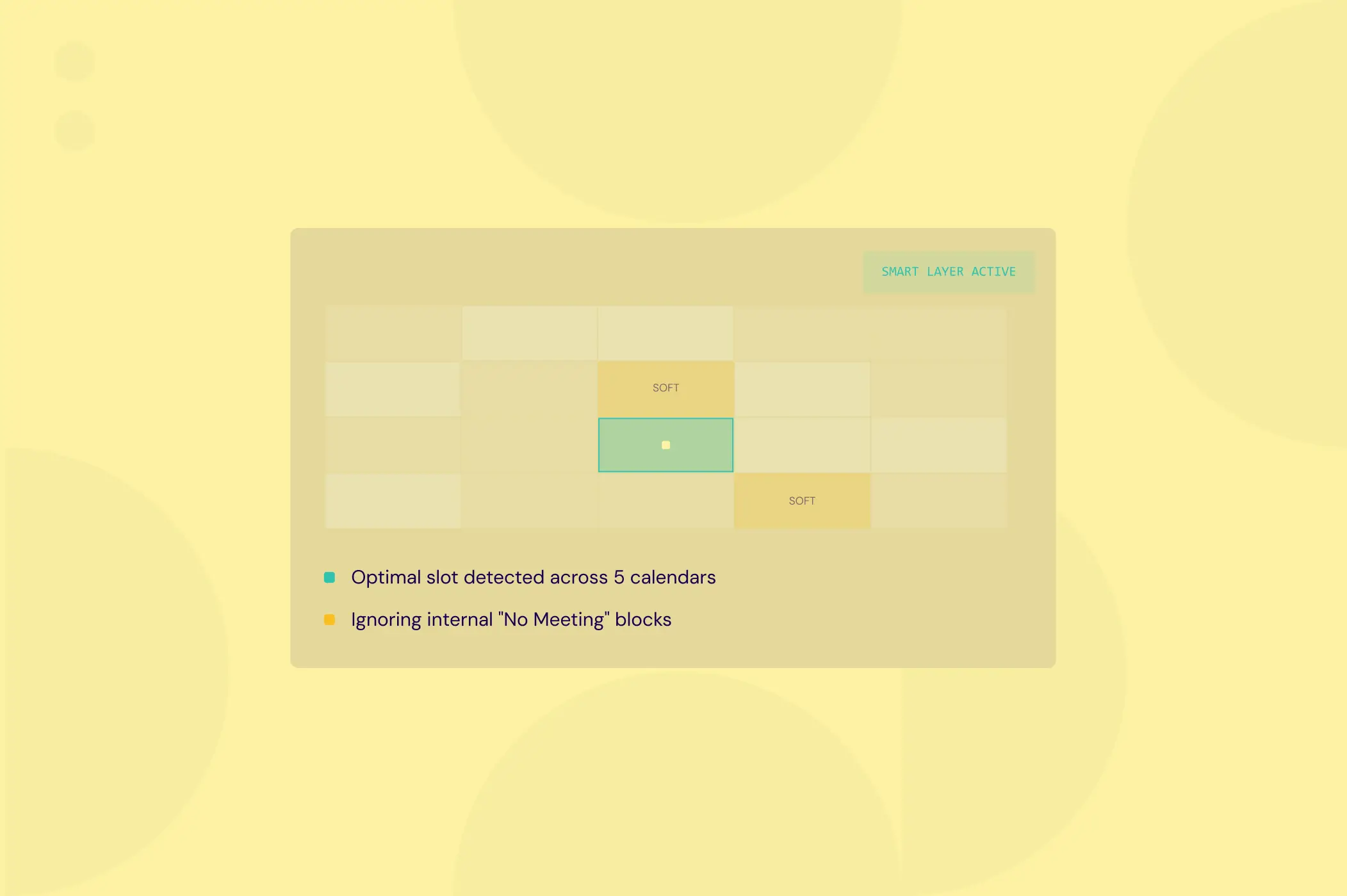
How to Build an Agentic AI Recruiting Strategy: A Step-by-Step Adoption Guide for TA Teams
Enterprise TA teams are moving from AI chatbots to autonomous agents. Here's a stage-by-stage roadmap for building an agentic AI recruiting strategy that scales.